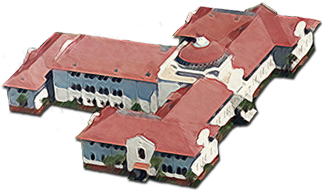

Dr. Kelly Davidson, Interim Department Head
Room 1104, Ashley Hall
The Department of History and Interdisciplinary Studies offers two tracks that lead to the Bachelor of Arts degree with a major in history. The History Track is for those majors pursuing solely the B.A. degree. The History Education Track allows students to pursue double majors in History and Secondary Education and graduate with certification to teach as well as a B.A. in History and a Bachelor of Science in Education in Secondary Education / History. The Department also offers a minor in history.
The undergraduate major and minor in the Department of History are designed to help students to further and to complete their general education by building upon the foundation that is afforded by the University’s Core Curriculum. The programs also provide students with the basic knowledge, skills, and values required for professional careers in history and for advanced study in the field. The History Track is a flexible program that presents students with opportunities to supplement the major by taking one or two minors. The History Education Track enables students to earn both a B.A. in History and a B.S.Ed. in Secondary Education / History with as few as 126 hours if all specific requirements are met.
History’s scope is extremely broad, and people and their institutions form a particular focus of the discipline. The use of language and the ability to communicate skillfully also are concerns of history. Thus, the study of history prepares students for many different occupations and professions in which such qualities are essential.
Traditionally, teaching has been a career possibility, but, as well, graduates of the program in history are prepared to enter graduate school for further study; to seek employment in business or government, in museums and libraries, in publishing, journalism, and advertising; or to enter the military, politics, or theology. A degree in history is excellent preparation for business school or law school.
Students who are interested in the history major or who have questions about the vocational possibilities of the major should consult with members of the Department of History in Ashley Hall.
Requirements for the Public History Track for History Majors
The Public History track enables undergraduate majors in History to prepare for careers in historic preservation, historical tourism, archival management, object collections management, museum studies, exhibit design, and other related public history fields.
As part of the B.A. degree in History, History majors must complete the following three courses to earn the Public History Track:
| Code | Title | Hours |
|---|---|---|
| HIST 4215 | Introduction to Public History | 3 |
| HIST 4216 | Principles of Public History | 3 |
| HIST 4810 | Internship in History | 3 |
Requirements for the Honors Track for History Majors
The Honors Track in history allows students the option of pursing the major at a more challenging level. To enter the track, student must be history majors with an overall GPA of 3.0. They must have a 3.0 average in all history courses taken and must have completed HIST 3000 with a grade of “B” or higher. They must maintain an overall GPA of 3.0 and a GPA of 3.0 in the major.
Students must complete three courses from among the following options, with at least a grade of “B” in each:
| Code | Title | Hours |
|---|---|---|
| HIST 3030H | Honors Topics in U.S. History | 3 |
| HIST 3040H | Honors Topics in European History | 3 |
| HIST 3050H | Honors Topics in World History | 3 |
| HIST 4800H | Honors Directed Study: Thesis | 3 |
Students completing the Honors Track in history will have it noted on their transcript.
History
HIST 1011. History of Civilization I. 3 Hours.
Survey of the development of major world civilizations from antiquity through the 14th century. Emphasis will be placed on the cultural achievements of each civilization.
HIST 1011H. Honors History of Civilization I. 3 Hours.
Survey of world civilizations from antiquity through the 14th century. Emphasis will be placed on the cultural achievements of each civilization; taught in an enriched environment.
HIST 1012. History of Civilization II. 3 Hours.
Survey of early modern world civilizations from the 15th through the 18th century. Emphasis will be placed on the growing interactions of world cultures.
HIST 1012H. Honors History of Civilization II. 3 Hours.
Survey of early modern world civilization from the 15th through the 18th centuries. Emphasis will be placed on the growing interactions of world cultures; taught in an enriched environment.
HIST 1013. History of Civilization III. 3 Hours.
Survey of world civilizations during the 19th and 20th centuries. Emphasis will be placed on the impact of industrialization, global conflict, and the emergence of the Third World.
HIST 1013H. Honors History of Civilization III. 3 Hours.
Survey of world civilizations during the 19th and 20th centuries. Emphasis will be placed on the impact of industrialization, global conflict, and the emergence of the Third World; taught in an enriched environment.
HIST 1111. World History I. 3 Hours.
A survey of world history to early modern times. Students in this course will be expected to participate frequently in class discussions, take 12 unit quizzes, and proctored midterm and final exams.
For more information on this institution's eCore courses, please see http://www.valdosta.edu/ecore/.
HIST 1112. World History II. 3 Hours.
A survey of World History from early modern times to the present.
HIST 2111. United States History to 1865. 3 Hours.
A survey of the major political, economic, social, and cultural developments in the United States and Georgia to 1865. (Either HIST 2111 or HIST 2112 satisfies legislative requirements for U.S./Georgia History.).
HIST 2111H. Honors United States History to 1865. 3 Hours.
A survey of the major political, economic, social, and cultural developments in the United States and Georgia to 1865, taught in an enriched environment. (Either HIST 2111H or HIST 2112H satisfies legislative requirements for U.S./Georgia History.).
HIST 2112. United States History since 1865. 3 Hours.
A survey of the major political, economic, social, and cultural developments in the United States and Georgia since 1865. (Either HIST 2111 or HIST 2112 satisfies legislative requirements for U.S./Georgia History.).
HIST 2112H. Honors United States History Since 1865. 3 Hours.
A survey of the major political, economic, social, and cultural developments in the United States and Georgia since 1865, taught in an enriched environment. (Either HIST 2111H or HIST 2112H satisfies legislative requirements for U.S./Georgia History.).
HIST 3000. Study of History. 3 Hours.
Prerequisites: ENGL 1101 or 1101H, and ENGL 1102 or 1102H; nine (9) semester hours from HIST 1011 or 1011H, 1012 or 1012H, 1013 or 1013H, 2111 or 2111H, 2112 or 2112H; declaration of a major in history or secondary education. An overview of the study of history, with emphasis on historiography and historical methods. Must be taken as, or concurrently with, the first upper-division history course.
HIST 3030. Special Topics in U.S. History. 3 Hours.
Selected themes of historical and contemporary interest in U.S. History. May be repeated for credit if topics are different.
HIST 3030H. Honors Topics in U.S. History. 3 Hours.
Special topics in United States history for History Honors Track. May be repeated for credit.
HIST 3040. Special Topics in European History. 3 Hours.
Selected themes of historical and contemporary interest in European History. May be repeated for credit if topics are different.
HIST 3040H. Honors Topics in European History. 3 Hours.
Special topics in United States history for History Honors Track. May be repeated for credit.
HIST 3045. Study Abroad Special Topics in European History. 3 Hours.
Selected themes of historical and contemporary interest in European History as part of a study abroad program. May be repeated for credit if topics are different.
HIST 3050. Special Topics in World History. 3 Hours.
Selected themes of historical and contemporary interest in World History. May be repeated for credit if topics are different.
HIST 3050H. Honors Topics in World History. 3 Hours.
Special topics in United States history for History Honors Track. May be repeated for credit.
HIST 3060. Special Topics in European and World History. 3 Hours.
Selected themes of historical and contemporary interest in European and World History. May be repeated for credit if topics are different.
HIST 3070. Special Topics in European, U.S., and World History. 3 Hours.
Selected themes of historical and contemporary interest in European, U.S., and World History. May be repeated for credit if topics are different.
HIST 3080. Special Topics in European and U.S. History. 3 Hours.
Selected themes of historical and contemporary interest IN European and U.S. History. May be repeated for credit if topics are different.
HIST 3090. Special Topics in U.S. and World History. 3 Hours.
Selected themes of historical and contemporary interest in U.S. and World Hstory. May be repeated for credit if topics are different.
HIST 3120. History of Cuisine and Culture. 3 Hours.
Overview of food and human society from early human civilization to the modern era. The course will emphasize changes in food production and consumption as well as the development of ethnic and cultural differences in cuisine.
HIST 3201. The Ancient Near East. 3 Hours.
The history of Ancient Egypt and Mesopotamia, with emphasis on political structures, social institutions, and cultural developments.
HIST 3202. Hellenistic Greece and Rome. 3 Hours.
A study of Mediterranean civilizations from the era of Alexander the Great through the fall of the Roman Empire. Greco-Roman contributions to western cultural traditions will be emphasized.
HIST 3203. Renaissance and Reformation. 3 Hours.
A study of the cultural, intellectual, and religious life of Europe in the 14th, 15th, and 16th centuries.
HIST 3205. Europe in the Age of Louis XIV, 1648-1750. 3 Hours.
A study of major trends in European history from the Peace of Westphalia to the Enlightenment. Cultural, social, and political achievements of European countries will be stressed.
HIST 3206. Revolutionary Europe, 1750-1815. 3 Hours.
A study of major developments in Europe from the Enlightenment through the defeat of Napoleon. The impact of the French Revolution on Europe will be emphasized.
HIST 3207. Europe, 1815-1914. 3 Hours.
A survey of the leading developments of the period in Europe, including social and nationalistic trends. Emphasis is placed on factors leading to World War I.
HIST 3208. Europe, 1914-1945. 3 Hours.
A survey of the lost generation living in a society broken and disillusioned by World War I.
HIST 3209. Europe Since 1945. 3 Hours.
A study of European domestic and international affairs since 1945 with emphasis upon the major states.
HIST 3220. Medieval Civilization. 3 Hours.
Survey of medieval society, politics, and culture from the disintegration of the Roman Empire to the first currents of the Renaissance and Reformation. The course will emphasize the great diversity of medieval Europe in areas including government, piety, social relations, intellectual life, and economic systems.
HIST 3230. Byzantine Empire and Society. 3 Hours.
Examination of the development of Byzantium between the foundation of Constantinople in 330 and the fall of the city to the Ottoman Turks in 1453. The course will focus on the political, ideological, and cultural features of Byzantine civilization as a synthesis of ancient and medieval models.
HIST 3240. The Crusades. 3 Hours.
Examination of the origin and development of the Crusades between the eleventh and the sixteenth centuries. The course will examine the theoretical foundations of crusading, the diverse character of the movement, and the evolving scope of its objectives.
HIST 3250. Power and Community in Medieval Europe. 3 Hours.
Introduction to key concepts of public authority and social order that dominated medieval mentalities and affected political and cultural practices in Europe between the sixth and the sixteenth centuries. The course examines a range of ideas such as state, rulership, justice, sovereignty, liberty, divine power, and their practical expression.
HIST 3260. Saints and Society in the Middle Ages. 3 Hours.
A history of the medieval cult of saints, its theology, practices and political effects from late Antiquity to the fifteenth century. The course will focus on evolving understandings of sanctity, diverse models of holiness, the social function of shrines and relics, and the institutionalization of cults of saints.
HIST 3270. Culture and Ethnicity in Pre-Modern East Europe. 3 Hours.
An examination of the multitude of cultural, religious, and ethnic identities within Eastern Europe, with a special focus on Poland, Bohemia and Russia, from the 15th to the late 18th centuries. This course will explore the close relations between those identities and the diversity of original political traditions in the region.
HIST 3280. War and Romance in the Middle Ages. 3 Hours.
An examination of the socio-political aspects of medieval warfare and medieval understanding of love and romance as powerful forces shaping people's religious and social experience, often in a parallel dimension to violence and bloodshed. The spiritual approach to violence, new models of masculine prowess, and the moral code of warfare and carnal desires flamboyantly displayed in chivalric culture and courtly love will also be studied.
HIST 3401. Slavic Europe to 1815. 3 Hours.
History of Slavic Europe from the early Middle Ages to the end of the Napoleonic Wars. The course will examine the history of Russian and other Slavic peoples, with an emphasis on political, religious, social, and economic developments.
HIST 3402. Slavic Europe Since 1815. 3 Hours.
History of Slavic Europe from 1815 to the present. The course will examine the history of Russian and other Slavic peoples in the modern period.
HIST 3500. German History, 1700-1945. 3 Hours.
An in-depth study of German history from the rise of Brandenburg-Prussia to the fall of Nazi Germany. Topic areas include social, political, intellectual, cultural, diplomatic, and gender history.
HIST 3601. World Military History to 1618. 3 Hours.
Overview of major developments in military history to 1618. The course examines changes in military strategy, technology, and organization, with a focus on comparing systems in different regions and time periods.
HIST 3602. World Military History Since 1618. 3 Hours.
Overview of major developments in military history since 1618 and the outbreak of the Thirty Years War. The course examines changes in military strategy, technology, and organization, with a focus on comparing systems in different regions and time periods.
HIST 3990. History Teaching Tutorial. 1 Hour.
Prerequisites: Completion of one of the following: HIST 1011, 1011H, 1012, 1012H, 1013, 1013H, 2111, 2111H, 2112 or 2112H; Junior or Senior standing; declaration of the major in history, secondary history education, or middle grades education with a primary concentration area in social studies. An introduction to the process of teaching history at the postsecondary survey level. Under the direction of a history faculty member, students will engage in a variety of activities such as observing classes, conducting study sessions and tutorials, and other activities directly related to a designated lower division (1000-2000 level) history survey course. May be taken three times for credit with a different faculty mentor and a different course in each instance.
HIST 4100. United States Constitutional History. 3 Hours.
Development of American constitutionalism from its origins in England and colonies to the present time.
HIST 4101. American Legal History. 3 Hours.
History of American law from colonial times to the present. The course will examine developments in American legal history, especially the relationship between social and legal changes in such areas as criminal law, the law of slavery, and private law, particularly at the state level. The course also examines the development of such legal institutions as the bench and bar and legal education.
HIST 4198. Colonial North America to 1763. 3 Hours.
A study of major themes in colonial history in North America to 1763. The course will examine such themes as the origins of European colonization, the development of slavery, gender and race relations, religion and society, the imperial struggle for North America, and intercultural relations among Europeans, Africans, and Native Americans.
HIST 4199. Revolutionary America, 1763-1789. 3 Hours.
A study of the American Revolutionary era from the end of the Seven Years War to the ratification of the Constitution. The course examines political, economic, cultural, social, and military history of the period, with special emphasis on race and gender relations, the origins of American identity, the War for Independence, and the drafting and ratification of the Constitution.
HIST 4202. United States, 1789-1850. 3 Hours.
A study of United States history from the Washington administration through the Compromise of 1850, focusing on political, cultural, social, and economic developments.
HIST 4203. United States, 1850-1877. 3 Hours.
A study of United States history from the Compromise of 1850 to the end of Reconstruction. Focuses on the section crisis of the 1850s, the Civil War, and the Reconstruction process after the war.
HIST 4204. United States, 1877-1921. 3 Hours.
A study of United States history from the end of Reconstruction to the end on the Wilson administration. Emphasizes diplomatic, ethnic, cultural, political, and social developments.
HIST 4205. United States, 1921-1945. 3 Hours.
A study of United States history from the end of World War I to the end of World War II. Focuses on the "Roaring '20s," the Great Depression, and U.S. involvement in World War II.
HIST 4206. United States Since 1945. 3 Hours.
A study of United States history since World War II with emphasis on political, cultural, social, and economic developments and the nation's foreign relations.
HIST 4207. United States Diplomacy to 1921. 3 Hours.
A study of United States foreign relations from the Revolutionary period through 1921.
HIST 4208. United States Diplomacy since 1921. 3 Hours.
A study of united states foreign relations since 1921.
HIST 4209. The United States in the 1980's. 3 Hours.
Survey of the history on the United States in the 1980's. The course will provide students with a broad understanding of the major social, political, cultural, and economic trends and developments during the period.
HIST 4210. History of Georgia. 3 Hours.
A comprehensive survey of Georgia's development from the occupation by the earliest Indians to the present. Satisfies the Georgia History legislative requirements.
HIST 4211. Georgia History through 1865. 3 Hours.
A study of Georgia's history from its occupation by the Indians through the Civil War, with attention to the state's development in the regional, national, and international context. Satisfies Georgia History legislative requirement.
HIST 4212. Georgia History since 1865. 3 Hours.
A study of Georgia's history from the Civil War to the present, with attention to the state's development in its regional, national, and international context. Satisfies Georgia history legislative requirement.
HIST 4215. Introduction to Public History. 3 Hours.
An introduction to the foundational concepts, methods, professional opportunities, and challenges in public history. Course provides the basic knowledge required in museum studies, historic preservation, cultural resources management, and related fields, and emphasizes issues related to communicating about history to the general public.
HIST 4216. Principles of Public History. 3 Hours.
An exploration of public history leading concepts in the discipline, with opportunities for hands-on experience. The course includes historic preservation, object collections management, museum studies, exhibit design, historical tourism, archival management, and related fields. Course highlights graduate school and career paths for public history students.
HIST 4221. The Old South. 3 Hours.
A detailed study of the social, economic, cultural, and intellectual life of the colonial and antebellum South, with consideration of the influence of slavery.
HIST 4222. The New South. 3 Hours.
A history of the South since the Civil War, with special attention to political, social, economic, and cultural developments, as well as the problems of southern blacks after emancipation.
HIST 4225. History of the American West. 3 Hours.
History of the American West from Spanish colonial times to the present. The course will consider economic, social, political, and cultural developments of the region.
HIST 4226. Colonial South. 3 Hours.
Also offered as NAIS 4226. A study of the American South in colonial times, with special emphasis on the Deep South. The course will examine the interaction of African, English, French, Native American, and Spanish cultures.
HIST 4227. History of American Sport. 3 Hours.
An examination of the history of American sports, their cultural context, and how cultures and sport have acted on each other.
HIST 4231. African-American History to 1865. 3 Hours.
Also offered as AFAM 4231. The history of the African- Americans from their origin in Africa to the end of slavery in the U.S., with emphasis on their economic life and social thought.
HIST 4232. African-American History Since 1865. 3 Hours.
Also offered as AFAM 4232. The history of the African- American struggle for equality after emancipation, with special focus on the problems of black leadership from Frederick Douglass to the present.
HIST 4233. African American Cultural History. 3 Hours.
Also offered as AFAM 4233. An examination of the evolution of African American cultural expression from slavery to the present, emphasizing in particular literature, theater, visual art, film, and music.
HIST 4234. African American Intellectual History. 3 Hours.
Also offered as AFAM 4234. An examination of the intellectual history of African Americans from the 17th century to the present. Topics may include the role of black intellectuals in American society, changing conceptions of race, and the global context of African American thought.
HIST 4235. Nazi Germany and the Jim Crow South. 3 Hours.
Also offered as AFAM 4235. A comparative analysis of racial theory and practices in both the Jim Crow South and Nazi Germany in the first half of the 1900's.
HIST 4240. American Social History. 3 Hours.
Analysis of the major trends in religion, culture, social structures, and social groups in the United States from the Colonial Era until the present. Particular attention is paid to the experiences of the various ethnic groups making up the American people.
HIST 4241. Native American History to 1850. 3 Hours.
Also offered as NAIS 4241. Overview of Native American history in North America from the earliest human occupation of the continent to 1850. The course examines the economic, cultural, diplomatic, military, and social history of Native Americans including the development and implementation of Indian policies by non-natives.
HIST 4242. Native American History Since 1850. 3 Hours.
Also offered as NAIS 4242. Overview of Native American history in North America since 1850. The course examines the economic, cultural, diplomatic, military, and social history of Native Americans including the development and implementation of United States Indian policy.
HIST 4243. Native People in the American Southeast. 3 Hours.
Also offered as NAIS 4243. A study of the native peoples in the southeastern United States from prehistory to Removal. The course will emphasize social and cultural changes as well as relationships among native groups.
HIST 4244. The Hollywood Indian: Native Americans in Film. 3 Hours.
Also offered as NAIS 4244. The study of the portrayal of Native Americans in film, particularly in terms of accuracy and the extent to which films have created, perpetuated, or corrected ethnic stereotypes. The course will also study how films about Native Americans reflect attitudes prevalent in American culture as a whole.
HIST 4261. Women in the U.S. to 1869. 3 Hours.
Also offered as WGST 4261. A study of United States history from the perspective of women. Includes social, cultural, political, intellectual, and economic aspects of the nation's history, and more specifically, the ways women influenced and were influenced by various events and movements in U.S. history from the Colonial period to 1869.
HIST 4262. Women in the U.S., 1869 to the Present. 3 Hours.
Also offered as WGST 4262. A study of United States history from the perspective of women. Includes social, cultural, political, intellectual, and economic aspects of the nation's history, more specifically, the ways women shaped and were influenced by various events and movements in U.S. history from 1869 to present.
HIST 4290. U.S. Military History. 3 Hours.
A study of military experiences and issues in American history from the Colonial Era to the present. The course analyzes war, its economic issues, technological developments, politics, and other factors that have influenced military aspects of American history.
HIST 4291. U.S. Political History to 1877. 3 Hours.
A study of U.S. political history to 1877. Special emphasis will be placed on national elections and the parties and issues that have influenced American political history.
HIST 4292. U.S. Political History Since 1877. 3 Hours.
A study of U.S. political history from 1877 to the present. Special emphasis will be placed on national elections and the parties and issues that have influenced American political history.
HIST 4295. Environmental History. 3 Hours.
Overview of environmental history with particular emphasis on North America. The course will examine human impact on the environment from the earliest times to the present as well as the development of conservation policies and the environmental movement.
HIST 4296. History of Contemporary Issues in the U.S.. 3 Hours.
Overview of the longer term historical background of selected contemporary issues in the United States. The course will examine current political, social, cultural, and economic issues and problems including terrorism, economic conditions, and civil rights and liberties.
HIST 4301. Colonial Latin America. 3 Hours.
The founding, growth, and development of Latin America by Spain and Portugal to the wars of independence.
HIST 4302. Modern Latin America. 3 Hours.
Major historical trends in Latin America since the wars of independence.
HIST 4303. U. S. Spanish Borderlands. 3 Hours.
Also offered as NAIS 4303. A study of the history of Spanish North America and its influence on the history of the United States and Native Americans, 1513 to 1850. Special emphasis will be placed on the region's diversity of peoples and intercultural relations as well as aspects of social, cultural, economic, imperial, and military history.
HIST 4404. History of the Vietnam War. 3 Hours.
An exploration of the many interrelated aspects of the conflict in Vietnam. Topics include French colonization, Ho Chi Minh and Vietnamese nationalism, the 1946-1954 war between the French and the Vietminh, the Cold War policies of the United States, escalating United States intervention in Vietnam, the United States' war in Vietnam (1965-1973), the fall of Saigon, domestic opposition to the war within the U.S.A., and postwar legacies of the conflict.
HIST 4405. History of China since 1800. 3 Hours.
An examination of the political, economic, cultural, diplomatic, and military history of modern China. The course begins with an examination of the collapse of the Qing (Ch'ing) Dynasty, and concludes with the story of "New China" in the 21st Century.
HIST 4501. History of the Middle East to 1798. 3 Hours.
Overview of the political, religious, and cultural history of the Middle East from the beginning of the Islamic era to Napoleon's invasion of Egypt.
HIST 4502. History of the Middle East Since 1798. 3 Hours.
Overview of the history of the Middle East in the modern period. The course examines the development of modern states, the effects of imperialism, the impact of World War I and II, and the results of the Arab-Israeli conflict.
HIST 4600. Animal Ethics: An Historical Perspective. 3 Hours.
Also offered as PHIL 4600. An investigation of the ethics of human-nonhuman relationship and how ethical concerns have been interpreted in various historical periods and regions. Particular attention will be paid to how the ethics of human-nonhuman relationships have varied in different regions of the world, such as in Europe, Africa, Asia, and the Americas, as well as changeover historical periods, such as the Industrial Revolution.
HIST 4800. Directed Study in History. 3 Hours.
Supervised readings in areas of history not normally available in regular course offerings, with regular conferences between instructor and student. May be repeated for up to 9 hours of credit if topics are different.
HIST 4800H. Honors Directed Study: Thesis. 3 Hours.
Directed study in selected areas of history, with regular conferences between instructor and student, leading to the writing of a thesis. For students in the History Honors Track.
HIST 4810. Internship in History. 3-9 Hours.
Supervised practical experience related to the discipline of history in an appropriate agency, combined with a program of academic work. The number of credit hours granted is dependent on the nature of the program, the hours worked, and the academic program approved in advance. (Graded on satisfactory/unsatisfactory basis.).
HIST 4950. Senior Seminar. 3 Hours.
Prerequisites: HIST 3000 and senior Standing. A seminar focused on selected topics and designed to help students synthesize their knowledge and reinforce the skills they have acquired history majors.
Interdisciplinary Studies
INDS 2000. Introduction to Interdisciplinary Studies. 3 Hours.
An introduction to the theory of interdisciplinary. The course focuses on exploring common pathways and connections among disciplines. It enables students to develop a personal theory of interdisciplinary studies and culminates in a detailed plan for an individualized major.
INDS 4000. Interdisciplinary Studies Capstone. 3 Hours.
Planned seminars, directed study, and a project will be used to demonstrate mastery of interdisciplinary study. The course provides the opportunity for synthesis and critical assessment of multiple interdisciplinary foci into a coherent whole.
Philosophy
PHIL 2010. Fundamentals of Philosophy. 3 Hours.
An introduction to the principal problems with which philosophy is concerned: methods of inquiry; principles of critical reasoning; analysis of value systems; appraisals and analysis of basic beliefs and attitudes. Emphasis is on the contribution of important movements and major philosophers and on the relevance of philosophy to religious, political, social, ethical, and/or scientific issues.
PHIL 2010H. Honors Fundamentals of Philosophy. 3 Hours.
An introduction to the principal problems with which philosophy in concerned: methods of inquiry; principles of critical reasoning; analysis of values and value systems; appraisals and analysis of basic beliefs and attitudes, taught in an enriched, discussion-oriented environment. Emphasis is on the contribution of important movements and major philosophers and on the relevance of philosophy to religions, political, social, ethical, and/or scientific issues.
PHIL 2020. Principles of Logic and Argumentation. 3 Hours.
An introduction to the principles of logic and the nature of argumentation. Attention is given to language analysis, fallacies of reasoning, deductive and inductive procedures, subjective factors of reasoning and scientific method. Emphasis is on the practical application of basic principles to the analysis of ethical, political, and legal arguments and theories.
PHIL 2020H. Honors Principles of Logic and Argumentation. 3 Hours.
An introduction to the principles of logic and the nature of argumentation, taught in a discussion-oriented environment emphasizing reasoned discourse. Attention is given to lang- uage analysis, fallacies of reasoning, deductive and induc- tive procedures, subjective factors of reasoning and scientific method. Emphasis is on the practical appli- cation of basic principles to the analysis of ethical, political, and legal arguments and theories.
PHIL 2030. Ethics and Contemporary Society. 3 Hours.
An introduction to the philosophical study of morality, including the theory of right and wrong behavior, the theory of value, and the theory of virtue.
PHIL 3030. African to African American Philosophy and Religious Studies. 3 Hours.
Also offered as PHIL 3030, REL 3030, and NAIS 3030. An examination of philosophies and religious traditions which begin in Africa and move through the Caribbean into the Americas. The course emphasizes ontological and epistemological themes that begin in Africa and cross the Atlantic as well as Indigenous African influences in the philosophies and relgions of the Caribbean and the Americas.
PHIL 3060. History of Ancient Philosophy. 3 Hours.
A historical survey of philosophy of the ancient period, including Greek, Roman and other traditions.
PHIL 3070. History of Medieval Philosophy. 3 Hours.
A historical survey of philosophy of the medieval period.
PHIL 3080. History of Early Modern Philosophy. 3 Hours.
A historical survey of philosophy of the early modern period, ranging from the 16th to the 18th centuries A.C.E.
PHIL 3090. History of Late Modern Philosophy. 3 Hours.
A historical survey of philosophy of the late modern period, ranging from the 19th to the 20th centuries A.C.E.
PHIL 3100. Ethics and Health Care. 3 Hours.
A study of ethical issues in health care delivery, with special emphasis on abortion, euthanasia, paternalism, and autonomy, confidentiality, medical experimentation and informed consent, allocation of scarce resources, and the right to health care.
PHIL 3110. Aesthetics. 3 Hours.
A study of the nature of art and theories of value, with special attention to the definition of "art", what we mean by "having aesthetic taste", what "creativity" is, and how visual arts, music, poetry, and scientific images and models relate to issues in ethics, human emotions, and our social/political context.
PHIL 3120. Ethical Theory. 3 Hours.
An introduction to ethical theory, with special emphasis on survey of classical theorists and on the study of theoretical debates in normative ethics.
PHIL 3130. Social and Political Philosophy. 3 Hours.
An introduction to social theory and practice, with special emphasis on survey of classical theories and the study of practical policy issues.
PHIL 3140. Ethics and Law. 3 Hours.
A study of ethical issues in law and society, with special emphasis on the nature of law and legal reasoning, of responsibility and punishment, constitutional adjudication, procedural justice, the limits of liberty, and civil dis- obedience.
PHIL 3150. Ethics and Business. 3 Hours.
A study of ethical issues in business and society, with special emphasis on corporate responsibility, regulation of business, and the protection of workers, consumers and the environment.
PHIL 3160. Ethics and Media. 3 Hours.
A study of ethical issues in the media, with special empha- sis on the pursuit of news, advertising, media lobbying, terrorism and the media, the reporter and personal ethics, freedom of the press, and ethics and the Internet.
PHIL 3170. Ethics and Sport. 3 Hours.
A study of ethical issues in sport and society, with special emphasis on issues such as contest and competition, com- mercialization of sport, cheating, drug use, violence, gend- er, and racial discrimination.
PHIL 3180. Ethics and the Environment. 3 Hours.
A study of ethical issues in our interaction with the envir- onment, with special emphasis on the defining of an en- vironmental ethic and on specific issues such as local and global environmental case studies, deep ecology, ecofeminism, the history of the land ethic and its refinements, international governmental and non-governmental policies, and the protection of endangered species and habitats.
PHIL 3190. Ethics and the Social Sciences. 3 Hours.
A study of ethical issues in the social sciences, with special emphasis on issues such as human and animal experimentation, counseling, behavior control, punishment, psychological and sociological determination, and gender and racial discrimination.
PHIL 3200. Philosophy of Science. 3 Hours.
A study of philosophical problems and issues in science, including theories of explanation, scientific method, implications of science practice on society.
PHIL 3210. Ethics and Technology. 3 Hours.
A study of ethical issues in technology and society, with emphasis on developing a philosophy of technology and on issues such as automation, artificial intelligence, nuclear technologies, and the impact of new technologies on existing social structures.
PHIL 3230. Philosophy of Mind. 3 Hours.
A study and analysis of main issues in philosophical psy- chology and cognitive science, including the nature of the mental, models of thought and rationality, the role of emotions, the problem of free will, and virtual reality.
PHIL 3240. Philosophy of Sex. 3 Hours.
Also offered as REL 3240 and WGSS3240. An examination of the historic and current definitions and scholarly trends involving human sexuality. Religious and philosophical constructs in both Western and non-Western cultures will be emphasized.
PHIL 3300. Philosophy of Religion. 3 Hours.
The study of basic problems of religious belief and critical analysis of proposed solutions to these problems.
PHIL 3400. Existentialism. 3 Hours.
The study of some of the principal existentialist thinkers such as Kierkegaard, Nietzsche, Sartre, Heidegger, Simone de Beauvoir, Camus, Buber, and Jaspers. Also offered as REL 3400.
PHIL 3430. American Philosophy. 3 Hours.
A study of American philosophical thought, including the traditions of transcendentalism, Native American philosophy, African American philosophy, American feminism, with a focus on American pragmatism, including the works of C.S. Peirce, W. James, J. Dewey, and G.H. Mead.
PHIL 3530. Christian Ethics. 3 Hours.
Classical and contemporary sources, methods, and norms evident in a variety of approaches to Christian ethics such as Biblical ethics, feminist ethics, Catholic and Protestant social teachings, and liberation theology. Applies the social teachings of Christian traditions to relevant issues in social ethics today.
PHIL 3540. Ecology and World Religions. 3 Hours.
Also offered as REL 3540. An exploration of how Eastern and Western religious traditions address the question of the environment. This study will include the relationship of harmony with nature found in indigenous cultures, such as Native Americans and Aborigines, and will also emphasize the reading of contemporary ecological spiritualties.
PHIL 3610. Native American Thought and Cultures. 3 Hours.
Also offered as REL 3610 and NAIS 3610. A study of native American cultures in the areas of epistemology, ontology, metaphysics, religion, and spirituality. The course will examine historic and current trends related to the interaction between Native American and Western cultures.
PHIL 3620. Post-Colonization Issues in Indigenous Cultures. 3 Hours.
Also offered as REL 3620 and NAIS 3620. An examination of post-colonial issues in Indigenous cultures throughout the world. The course will focus on the individual and academic voices of Indigenous people. Attention will be given to issues of epistemology, ontology, metaphysics, religion, spirituality, ethics and a range of social and political issues.
PHIL 3630. Native American Women. 3 Hours.
Also offered as REL 3630 or WGSS 3630 or NAIS 3630. An examination of the contributions of North and South American Indigenous women in the areas of epistemology, ontology, metaphysics, religion, spirituality, and ethics. The course will include a range of Indigenous cultures, such as Alaskan, Hawaiian, and Pacific and Atlantic islanders and will explore the issues faced by Indigenous women in the Western hemisphere.
PHIL 3640. Environmental Philosophy. 3 Hours.
An introduction of environmental philosophy, with special emphasis on varying philosophical positions on epistemology, ontology, and aesthetics.
PHIL 3650. Mysticism and Social Justice. 3 Hours.
Also offered as REL 3650. An examination of the link between mysticism and social justice through selected writings of Western and Eastern mystical thinkers. The course will explore the historical and social contexts that gave rise to these mystical theologies and the personal and social commitment to integrate the contemplative life and the active life.
PHIL 3700. Buddhism. 3 Hours.
An exploration of major historical, cultural, and philosophical developments of the Buddhist tradition from its inception in the 5th century B.C.E. in India to its flourishing in modern times. Buddhist teachings, texts, and practices in Theravada, Mahayana, and Zen contexts are examined. Also offered as REL 3700.
PHIL 3710. Hinduism. 3 Hours.
An exploration of major historical, cultural, and philosophical developments of the Hindu tradition from its inception in 2300 B.C.E. in India to its flourishing in modern times. Hindu teachings, texts, cosmology, ritual, symbolic expression, and ethical practices will be explored. Also offered as REL 3710.
PHIL 3800. Philosophy, Religion and Film. 3 Hours.
Also offered as REL 3800. A study of the role of film in culture. This explores social context, religious themes, symbols, motifs, and images through screenings of films combined with an introduction to the growing literature on religion, ethics, and film.
PHIL 3850. Philosophy of Race. 3 Hours.
A study of issues of race in society, with emphasis on developing a philosophy of race and anti-racism. The historical conceptualization of race will be addressed through the history of philosophy and in works by such philosophers as Aristotle, Kant, Hegal, Dworkin, and Rawls. Various American philosophers of race will be introduced, including W. E. B. DuBois, Cornel West, Angela Davis, Michele Moddy-Adams, Patricia Hill Collins, and Marilyn Frye.
PHIL 3900. Philosophy of Happiness. 3 Hours.
An in-depth examination of the philosophy of happiness, drawing from the work of contemporary applied philosophy and classic historical figures, from antiquity to the modern era.
PHIL 4120. Ethics and Public Policy. 3 Hours.
A study of ethical issues involved in public policy, with special emphasis on issues such as environmental and urban planning, allocation of community resources, equal opportunity and affirmative action policies, allocation of medical resources, abortion, euthanasia, capital punishment, free speech, and privacy.
PHIL 4220. Ethics and Public Administration. 3 Hours.
Study of ethical issues in public administration. Special emphasis will be given to developing analytical skills in ethical decision-making in the public sector, highlighting the role of ethics and professional responsibility in public cases in public administration for ethical and theoretical underpinnings, and identifying situations involving professional malfeasance and conflict of interest. Students will analyze the environmental and human rights concerns that public administrators must incorporate into all their decision-making.
PHIL 4600. Animal Ethics: An Historical Perspective. 3 Hours.
Also offered as HIST 4600. An investigation of the ethics of human-nonhuman relationship and how ethical concerns have been interpreted in various historical periods and regions. Particular attention will be paid to how the ethics of human-nonhuman relationships have varied in different regions of the world, such as in Europe, Africa, Asia, and the Americas, as well as change over historical periods, such as the Industrial Revolution.
PHIL 4800. Special Topics in Philosophy. 1-3 Hours.
A study of selected topics in philosophy. May be repeated for up to 9 hours of credit when topics differ.
PHIL 4810. Directed Study in Philosophy. 1-3 Hours.
An individual study of a special area of philosophy under supervision of the instructor. May be repeated for up to 6 hours of credit when topics differ.
PHIL 4900. Special Topics in Ethics. 1-3 Hours.
A study of selected topics in theoretical and applied ethics. May be repeated for up to 9 hours of credit when topics differ.
PHIL 4910. Directed Study in Ethics. 1-3 Hours.
An individual study of a special area of ethics under supervision of the instructor. May be repeated for up to 6 hours of credit when topics differ.
PHIL 4920. Metaphilosophy. 3 Hours.
Prerequisite: Senior Philosophy Major. A capstone course for senior philosophy majors, which includes individual research projects on selected themes, presented by students to their peers and to the philosophy faculty, who are participants in the course. World Wide Web Internet technology is included in course research and presentation.
Religious Studies
REL 2010. Introduction to Religion and Culture. 3 Hours.
An analysis of how different religions respond to a variety of human issues such as marriage and family, war and peace, gender roles, poverty, child labor, and increasing globalization.
REL 2020. World Religions. 3 Hours.
A study of the major religious traditions in their historical and cultural contexts. Concepts of the Holy, sacred stories, rituals, symbols, ethical codes, and sacred communities are examined in pre-literate cultures, Hinduism, Buddhism, Taoism, Confucianism, Judaism, Christianity, and Islam.
REL 2020H. Honors World Religions. 3 Hours.
An enriched study of the major religious traditions in their historical and cultural contexts. Concepts of the Holy, sacred stories, rituals, symbols, ethical codes, and sacred communities are examined in pre-literate cultures, Hinduism, Buddhism, Taoism, Confucianism, Judaism, Christianity, and Islam. A research component is selected from a variety of options relevant to the world's religions.
REL 3030. African to African American Philosophy and Religious Studies. 3 Hours.
Also offered as PHIL 3030, REL 3030, and NAIS 3030. An examination of philosophies and religious traditions which begin in Africa and move through the Caribbean into the Americas. The course emphasizes ontological and epistemological themes that begin in Africa and cross the Atlantic as well as Indigenous African influences in the philosophies and relgions of the Caribbean and the Americas.
REL 3240. Philosophy of Sex. 3 Hours.
Also offered as PHIL 3240 and WGSS 3240. An examination of the historic and current definitions and scholarly trends involving human sexuality. Religious and philosophical constructs in both Western and non-Western cultures will be emphasized.
REL 3300. Philosophy of Religion. 3 Hours.
The study of basic problems of religious belief and critical analysis of proposed solutions to these problems.
REL 3330. New Testament. 3 Hours.
A general academic introduction to the history, thought and literature of the New Testament, and to some of the major problems addressed in the area of New Testament studies.
REL 3340. Old Testament/Hebrew Bible. 3 Hours.
A presentation of the principle characters, events, social structures and theological perspectives reflected in texts of the Hebrew Bible. Old Testament/Hebrew Bible introduces methods and interpretive frameworks shaped by current biblical scholarship.
REL 3400. Existentialism. 3 Hours.
The study of some of the principal existentialist thinkers such as Kieregaard, Nietzsche, Sarte, Heidegger, Simone de Beauvoir, Camus, Buber, and Jaspers. Also offered as PHIL 3400.
REL 3500. Women and Gender in Early Christianity. 3 Hours.
Also offered as WGSS 3500. A study of images and representations of women and gender in the New Testament and other early Christian texts including apocrypha, pseudepigrapha, and Gnostic writings with special attention paid to historical and contemporary significance.
REL 3505. Varieties of Early Christianity. 3 Hours.
A study of variety of early Christian thought and practice in the first three centuries of the Common Era with a focus on an examination of extra-canonical literature.
REL 3510. Judaism. 3 Hours.
An inquiry that examines historical and cultural implications of the diaspora from the post-biblical period in Judaism to the present. The course addresses sacred texts, significant figures and the influence of social and political change on the integrity and perseverance of this tradition.
REL 3520. Islam. 3 Hours.
An introduction to Islam from its inception in the 7th century to the present. This inquiry examines historical and social dimensions of Islam in several geographic and cultural contexts including major contributions to western civilization. The study of principal figures, sacred texts and traditions will familiarize students with the basic features of this world religion.
REL 3530. Christian Ethics. 3 Hours.
Classical and contemporary sources, methods, and norms evident in a variety of approaches to Christian ethics such as Biblical ethics, feminist ethics, Catholic and Protestant social teachings, and liberation theology. Applies the social teachings of Christian traditions to relevant issues in social ethics today.
REL 3540. Ecology and World Religions. 3 Hours.
Also offered as PHIL 3540. An exploration of how Eastern and Western religious traditions address the question of the environment. This study will include the relationship of harmony with nature found in indigenous cultures, such as Native Americans and Aborigines, and will also emphasize the reading of contemporary ecological spiritualties.
REL 3600. Women and Religion. 3 Hours.
Also offered as WGSS 3600. An introduction to historical, theological, spiritual and liturgical dimensions of women's experience within religious traditions. Research opportunities increase students' awareness of the implication of gender as an interpretive category in religion.
REL 3610. Native American Thought. 3 Hours.
Also offered as PHIL 3610 and NAIS 3610. A study of Native American cultures in the areas of epistemology, ontology, metaphysics, religion, and spirituality. The course will examine historic and current trends related to the interaction between Native American and Western cultures.
REL 3620. Post Colonization Issues in Indigenous Cultures. 3 Hours.
Also offered as PHIL 3620 and NAIS 3620. An examination of post-colonial issues in Indigenous cultures throughout the world. The course will focus on the individual and academic voices of Indigenous people. Attention will be given to issues of epistemology, ontology, metaphysics, religion, spirituality, ethics and a range of social and political issues.
REL 3630. Native American Women. 3 Hours.
Also offered as PHIL 3630 or WGSS 3630 or NAIS 3630. An examination of the contributions of North and South American Indigenous women in the areas of epistemology, ontology, metaphysics, religion, spirituality, and ethics. The course will include a range of Indigenous cultures, such as Alaskan, Hawaiian, and Pacific and Atlantic islanders and will explore the issues faced by Indigenous women in the Western hemisphere.
REL 3640. Alternative Religions of the World. 3 Hours.
Also offered as NAIS 3640. An examination of the religions of the world not typically counted among the major world religions. The course will include the religions of Africa, South America, the Pacific and Atlantic islanders, and Wiccan and Neo-Pagan religions. The focus will be on the traditions as they are expressed and experienced by the followers of the religions.
REL 3645. Alternative World Religions and Medicine. 3 Hours.
An examination of diverse cultural and religious approaches to medicine.
REL 3650. Mysticism and Social Justice. 3 Hours.
Also offered as PHIL 3650. An examination of the link between mysticism and social justice through selected writings of Western and Eastern mystical thinkers. The course will explore the historical and social contexts that gave rise to these mystical theologies and the personal and social commitment to integrate the contemplative life and the active life.
REL 3700. Buddhism. 3 Hours.
An exploration of major historical, cultural, and philosophical developments of the Buddhist tradition from its inception in 5th century B.C.E. India to its flourishing in modern times. Buddhist teachings, texts, and practices in Theravada, Mahayana, and Zen contexts are examined. Also offered as PHIL 3700.
REL 3710. Hinduism. 3 Hours.
An exploration of major historical, cultural, and philosophical developments of the Hindu tradition from its inception in 2300 B.C.E. India to its flourishing in modern times. Hindu teachings, texts, cosmology, ritual, symbolic expression, and ethical practices will be explored. Also offered as PHIL 3710.
REL 3800. Philosophy, Religion and Film. 3 Hours.
Also offered as PHIL 3800. A study of the role of film in culture. This explores social context, religious themes, symbols, motifs, and images through screenings of films combined with an introduction to the growing literature on religion, ethics, and film.
REL 4700. Topics in Religious Studies. 1-3 Hours.
A forum for dialogue and discourse on a variety of timely issues in Religious Studies. The course reflects interests and concern of faculty and students by addressing particular subjects that relate the nexus of religion and human experience. May be repeated for up to 9 hours of credit when topics differ.
REL 4710. Directed Study in Religious Studies. 1-3 Hours.
An individual study of a special area of religious studies under supervision of instructor. May be repeated for up to 6 hours of credit when topics differ.
REL 4920. Senior Capstone Course. 3 Hours.
A capstone course for senior students in the Department of Philosophy who are taking the Religious Studies track. It includes individual research on selected themes, presented by students to their peers and to the Philosophy and Religious Studies faculty.