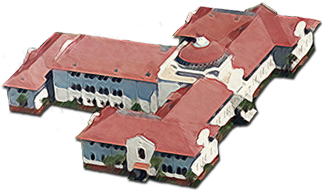

Dr. Wendy Hoofnagle, Department Head
Room 2109 West Hall
The Department of Communication and English offers a Master of Arts degree with a major in English. Students have the option of pursuing the M.A. with an emphasis in literature or the M.A. with an emphasis in rhetoric and composition.
The Department also offers a Master of Arts in English Studies for Language Arts Teachers, a fully online degree program. For information on this degree, click here.
Description
The Department of English at Valdosta State University offers a Master of Arts degree with a major in English for students who wish to continue their study of literature, literary criticism, language, rhetoric and composition, and creative writing. Because there is no formal tracking, students may, in consultation with their advisors, individually tailor their programs to accommodate special interests. Students earning a Master of Arts degree with a major in English are well prepared for a number of careers and programs. These include doctoral studies, college and secondary school teaching, business, and other professional endeavors. The English Department of VSU expects its graduate students to acquire the following:
- A breadth of knowledge, including general knowledge of major literary periods and movements, general knowledge of useful literary concepts and terminology, and specific knowledge of key works and figures;
- The ability to produce cogent written works blending knowledge of specific texts, history, and sources with a clearly developed critical point of view; and
- The ability to discuss their work articulately.
The English Department’s admissions policies, degree offerings, degree options, and course offerings are designed to help all students achieve these goals.
English
ENGL 6000. Graduate Option. 3 Hours.
An English Department course, numbered 4000 or above, which may be taken at the graduate level with appropriate adjustments agreed on by the student and the professor.
ENGL 7000. Approaches to Graduate Study. 3 Hours.
An introduction to the fields and methods of research and writing in graduate literary study.
ENGL 7005. Research Methods in English Studies for Language Arts Teachers. 3 Hours.
An introduction to research methods in contemporary English studies for language arts teachers.
ENGL 7010. Literary Theory and Criticism in Graduate Studies. 3 Hours.
The application of literary theory and criticism in the context of English graduate study.
ENGL 7100. British Literature for Language Arts Teachers. 3 Hours.
A representative survey of British literary authors and periods. This course may also introduce students to writers and text less well-known but which are currently in the process of becoming standard university assignments. The course provides breadth of coverage, including historical and cultural context.
ENGL 7110. Studies in British Literature to 1500. 3 Hours.
A focused survey in the area of British literature to 1500, with special emphasis on themes, genres, and/or figures. Attention will be given to cultural background and/or critical perspective.
ENGL 7120. Studies in British Literature 1500-1660. 3 Hours.
A focused survey in the area of British literature from 1500-1660, with special emphasis on themes, genres, and/or figures. Attention will be given to cultural background and/or critical perspective.
ENGL 7130. Studies in British Literature 1660-1800. 3 Hours.
A focused survey in the area of British literature from 1660-1800, with special emphasis on themes, genres, and/or figures. Attention will be given to cultural background and/or critical perspective.
ENGL 7140. Studies in British Romantic Literature. 3 Hours.
A focused survey in the area of Romantic literature, with special emphasis on themes, genres, and/or figures. Attention will be given to cultural background and/or critical perspective.
ENGL 7145. Studies in Victorian Literature. 3 Hours.
A focused survey in the area of Victorian literature, with special emphasis on themes, genres, and/or figures. Attention will be given to cultural background and/or critical perspective.
ENGL 7150. Studies in Modern and Contemporary British Literature. 3 Hours.
A focused survey in the area of modern and contemporary literature, with special emphasis on themes, genres, and/or figures. Attention will be given to cultural background and/or critical perspective.
ENGL 7200. American Literature for Language Arts Teachers. 3 Hours.
A representative survey of major American literary authors and movements. This course may also introduce students to writers and texts less well-know, but which are currently in the process of becoming traditional university survey assignments. The course provides breadth of coverage, including coverage of historical and cultural context.
ENGL 7210. Studies in American Literature to 1800. 3 Hours.
A focused survey in the area of American literature to 1800, with special emphasis on themes, genres, and/or figures. Attention will be given to cultural background and/or critical perspective.
ENGL 7220. Studies in American Literature 1800-1865. 3 Hours.
A focused survey in the area of American literature from 1800 to 1865, with special emphasis on themes, genres, and/or figures. Attention will be given to cultural background and/or critical perspective.
ENGL 7230. Studies in American Literature 1865-1914. 3 Hours.
A focused survey in the area of American literature from 1865 to 1800, with special emphasis on themes, genres, and/or figures. Attention will be given to cultural background and/or critical perspective.
ENGL 7240. Studies in Modern and Contemporary American Literature. 3 Hours.
A focused survey in the area of modern and contemporary American literature, with special emphasis on themes, genres and/or figures. Attention will be given to cultural background and/or critical perspective.
ENGL 7300. Studies in Special Topics. 3 Hours.
A focused survey in a selected topic, with special emphasis on themes, genres, and/or figures. Attention will be given to cultural background and/or critical perspective.
ENGL 7320. Studies in Genre. 3 Hours.
A focused survey in genre studies, with special emphasis on themes, genres, and/or figures. Attention will be given to cultural background and/or critical perspective.
ENGL 7400. Multicultural Literature for Language Arts Teachers. 3 Hours.
A survey of multicultural authors and movements, with an emphasis on race and culture in an historical context. This course may also introduce students to writers and texts less well-known, but which are currently in the process of becoming traditional university survey assignments. The course provides breadth of coverage, including coverage of historical and cultural context.
ENGL 7500. Creative Writing for Language Arts Teachers. 3 Hours.
An introduction to creative writing techniques in three genres: fiction, poetry, and creative nonfiction.
ENGL 7600. Studies in Rhetoric and Composition. 3 Hours.
A focused survey in the area of rhetoric and/or composition theory.
ENGL 7610. Composition Theory for Language Arts Teachers. 3 Hours.
Comparative study of contemporary theories of composition from the nineteenth century to the present day.
ENGL 7620. Rhetorical Theory for Language Arts Teachers. 3 Hours.
Study of contemporary theories of rhetoric, providing a review of key rhetorical theories that provide language arts teachers with alternative perspectives on the discourse of writers and speakers, their audiences, and the rhetorical situation.
ENGL 7710. English Language Change Past and Present for Language Arts Teachers. 3 Hours.
A study of past and present changes in the English language that investigates how English is currently changing, the ways in which it has changed, and why educators in English need to be aware of such changes.
ENGL 7720. English Grammar for Language Arts Teachers. 3 Hours.
Study of the grammatical standards and principles of effective writing through a review of grammatical principles and of rhetorical and stylistic techniques for language arts teachers.
ENGL 8100. Special Topics in British Literature for Language Arts Teachers. 3 Hours.
A study of one or two major topics, authors, and/or movements in British literary history that will focusing on historical context and specific genres.
ENGL 8110. Seminar in British Literature to 1500. 3 Hours.
A seminar in the area of British literature to 1500.
ENGL 8120. Seminar in British Literature 1500-1660. 3 Hours.
A seminar in the area of British literature from 1500-1660.
ENGL 8130. Seminar in British Literature 1660-1800. 3 Hours.
A seminar in the area of British literature from 1660-1800.
ENGL 8140. Seminar in British Romantic Literature. 3 Hours.
A seminar in the area of Romantic literature.
ENGL 8145. Seminar in Victorian Literature. 3 Hours.
A seminar in the area of Victorian literature.
ENGL 8150. Seminar in Modern and Contemporary British Literature. 3 Hours.
A seminar in the area of modern and contemporary literature.
ENGL 8200. Special Topics in American Literature for Language Arts Teachers. 3 Hours.
A study of one or two major topics, authors, and/or movements in American literary history focusing on historical context and specific genres.
ENGL 8210. Seminar in American Literature to 1800. 3 Hours.
A seminar in the area of American literature to 1800.
ENGL 8220. Seminar in American Literature 1800-1865. 3 Hours.
A seminar in the area of American literature from 1800 to 1865.
ENGL 8230. Seminar in American Literature 1865-1914. 3 Hours.
A seminar in the area of American literature from 1865 to 1900.
ENGL 8240. Seminar in Modern and Contemporary American Literature. 3 Hours.
A seminar in the area of modern and contemporary American literature.
ENGL 8300. Revision and Editing for Professionals. 3 Hours.
Examines principles of revising prose, beginning with the rhetorical decisions underlying the production of a specific piece of writing and exploring how decisions about diction, sentence structure, and punctuation combine to create an effective style.
ENGL 8310. Seminar in Special Topics. 3 Hours.
A seminar within the area of language and/or literature.
ENGL 8320. Seminar in Genre. 3 Hours.
A seminar in genre studies.
ENGL 8400. Special Topics in Creative Writing for Language Arts Teachers. 3 Hours.
A study of one or two genres in creative writing, emphasizing contemporary authors and their respective narrative techniques.
ENGL 8500. Special Topics in Multicultural Lit for Language Arts Teachers. 3 Hours.
Study of one or two major topics, authors, and/or movements in multicultural literature, with an emphasis on race and culture as they relate to historical context.
ENGL 8600. Seminar in Rhetoric and Composition. 3 Hours.
A seminar in the area of rhetoric and/or composition theory.
ENGL 8610. History of Rhetorical Theory for Language Arts Teachers. 3 Hours.
A study of the development of the art of rhetoric in Western thought.
ENGL 8690. Workshop in Rhetoric and Composition. 1-6 Hours.
Writing-intensive and leadership course for teachers that promotes writing-to-learn across subject areas and grade levels. Participants write for personal and professional reasons, research composition theory, and design a lesson based on their experience. The four-week program provides 9 SDU's or 6 hours of Master's degree credit. The course requires formal application and interview into the South Georgia Writing Project. Graduates from this program also participate in at least two programs, either through their school or the South Georgia Writing Project over the course of the following year.
ENGL 8700. Directed Study. 3 Hours.
Research in selected areas of language and literature.
ENGL 8710. Language in School, Community, and Society for Language Arts Teachers. 3 Hours.
A survey of concepts and research in the study of the relationship between language and society as these apply to schools, communities, and the multilingual society of the United States.
ENGL 8720. The Study of English Language Learners for Language Arts Teachers and Other Professionals. 3 Hours.
A study of the development of English language proficiency and bilingualism among second language learners and the factors influencing language acquisition.
ENGL 8800. Teaching College Composition. 3 Hours.
A seminar for students preparing to teach composition courses, including classroom observations, assignment design, and review of current pedagogy.
ENGL 8950. MAESLAT Comprehensive Exam Reading Hours. 1-6 Hours.
Graded "Satisfactory" or "Unsatisfactory". Individualized study and research in preparation for the MAESLAT comprehensive exam for completion of the degree requirements. May not be repeated for credit.
ENGL 8995. Comprehensive Exam Reading Hours. 1-6 Hours.
Grades "Satisfactory" or "Unsatisfactory". Individualized study and research in preparation for the comprehensive exams (non-thesis option) for completion of the degree requirements. May not be repeated for credit.
ENGL 8999. Thesis. 1-6 Hours.
Individualized study and research in preparation for a work of fifty or more pages demonstrating competent and substantial research coupled with an innovative approach to the subject matter. May be repeated for credit.
Linguistics
LING 6000. Principles of Language Study. 3 Hours.
A study of the nature, structure, and diversity of language, including English phonology (sounds), morphology (word formation), syntax (sentence structure), and semantics (meaning) contrasted with features of other selected languages and applied to fields such as literary study, written communication, and language acquisition.
LING 6160. Language in Society. 3 Hours.
A study of the nature of language and its use in society, including psychological and sociocultural variables in conversation, language varieties, multilingualism, world Englishes, and the development of language policy.
Master of Arts in Communication
MAIC 5000. Communication Theory. 3 Hours.
Review of theories of communication in a variety of contexts in the discipline. The use of theory construction, theory building, and theory analysis will be studied. Topics include rhetorical theories and artifacts, persuasion contexts, nonverbal communication theories, and organizational theories and strategies.
MAIC 5050. Mass Communication Theory. 3 Hours.
The study of the evolution of mass communication from its origins to emerging media technologies.
MAIC 6000. Strategic Integrated Communication. 3 Hours.
A study of how organizations create unified messaging across advertising, public relations, and digital platforms. Students design data-informed campaigns using social media analytics, audience segmentation, and content strategy to achieve measurable outcomes in evolving media landscapes.
MAIC 6100. Communications Leadership and Process Management. 3 Hours.
Application of communication theory to leadership and management practices. The course emphasizes interpersonal influence, collaboration, team communication, and ethical decision-making in complex organizations. Includes communication planning, resource management, grant writing, team coordination, and stakeholder engagement.
MAIC 6150. Entrepreneurship and Applied Communication. 3 Hours.
A supervised, applied learning experience where students partner with community organizations to address real-world communication challenges. The course emphasizes applying theory and strategy to develop solutions in organizational communication, leadership, and audience engagement while integrating technology, ethical practice, and entrepreneurial approaches within dynamic professional contexts. May be take twice for credit.
MAIC 6200. Intercultural Communication. 3 Hours.
Survey of recent research in intercultural communication theory and practice; particular attention will be paid to language, the acquisition of intercultural communication competence, and related issues.
MAIC 6250. Emerging Communication Strategies and Design. 3 Hours.
Investigation of communication theory and research guiding emerging media platforms. The course emphasizes AI-assisted message design, selection and evaluation, students explore how emerging technologies transform communication planning, engagement, and organizational communication in digital environments.
MAIC 6300. Crisis and Risk Communication. 3 Hours.
An examination of the role of risk and crisis communication in managing times of crisis and the resulting psychological, sociological, and cultural effects.
MAIC 6350. Communication, Conflict, and Negotiation. 3 Hours.
A survey of the role of communication in the management of conflict in interpersonal and professional contexts and analytical frameworks for understanding negotiations.
MAIC 6400. Organizational Communication. 3 Hours.
Advanced study of the theories and practices that inform communication in organizations including the process of organizing, communication networks, and organizational culture.
MAIC 6450. Rhetorical Criticism and Theory. 3 Hours.
An examination of rhetorical theory and criticism and their applications to help understand how language and symbols are processed and used in shaping perceptions.
MAIC 6500. College Pedagogy and Instruction. 3 Hours.
An introduction to teaching at the college level. Students will engage in inquiry, dialogue, reflection on pedagogical theory, active learning strategies, teaching goals, student learning outcomes, assessment, and developing a personal teaching philosophy.
MAIC 6550. Communication Practicum. 3 Hours.
Prerequisites: MAIC 5000, MAIC 5050, and MAIC 6500. A survey of methods designed to develop students' instructional skills and provide classroom experiences under the guidance and supervision of a faculty member. The course provides practical experience in classroom management, student engagement, activities, lecture/discussion, technology, and grading.
MAIC 6600. Integrated Communication Metrics. 3 Hours.
An examination of the impact of integrated communication in evolving digital communication environments.
MAIC 7100. Quantitative Research Methods in Communication. 3 Hours.
An advanced investigation of research methodologies used in the study of communication with in-depth study of research design and data management used to basic and applied research settings; study of descriptive, exploratory, and inferential statistical application; practical interpretations of computer-assisted data analysis.
MAIC 7150. Interpersonal Communication. 3 Hours.
Review of interpersonal communication theories and research with respect to personal and professional relationships including organizational, intercultural, and health care settings.
MAIC 7200. Qualitative Research Methods in Communication. 3 Hours.
Survey of qualitative research methods used to conduct systematic inquiry into communication topics including ethnography, interviews, focus groups, and textual analysis. The course provides practical experience in information-collection design and analysis.
MAIC 7300. Global Media Systems and Policy. 3 Hours.
Analysis of international media structures and their sociopolitical, cultural, and economic implications. Students examine freedom of expression, regulatory frameworks, and global media flows shaping public opinion and cross-cultural understanding.
MAIC 7400. Directed Study. 3 Hours.
Individual study of themes, applications, trends, and issues beyond that covered in other MAIC courses. The course may be repeated once for credit when topics vary.
MAIC 7700. Special Topics. 3 Hours.
Specialized course providing an opportunity to explore themes, applications, trends, and issues beyond the prescribed curriculum. May be repeated for credit when topics vary.
MAIC 7800. Communication, Ethics, Law, and Civic Engagement. 3 Hours.
A study of legal and ethical issues in communication, including intellectual property, libel, privacy, data governance, and media regulation. Emphasizes how emerging technologies challenge traditional legal frameworks.
MAIC 7999. Thesis or Project. 1-9 Hours.
Culminating research or creative project undertaken during the final semesters of study. Students may register for 1 to 9 credit hours. Can be repeated for credit. A maximum of 9 hours can be counted toward degree.